


Silverdale Breaks The Clay Deadlock

Coast Chronicler
19 December 2025, 10:00 PM
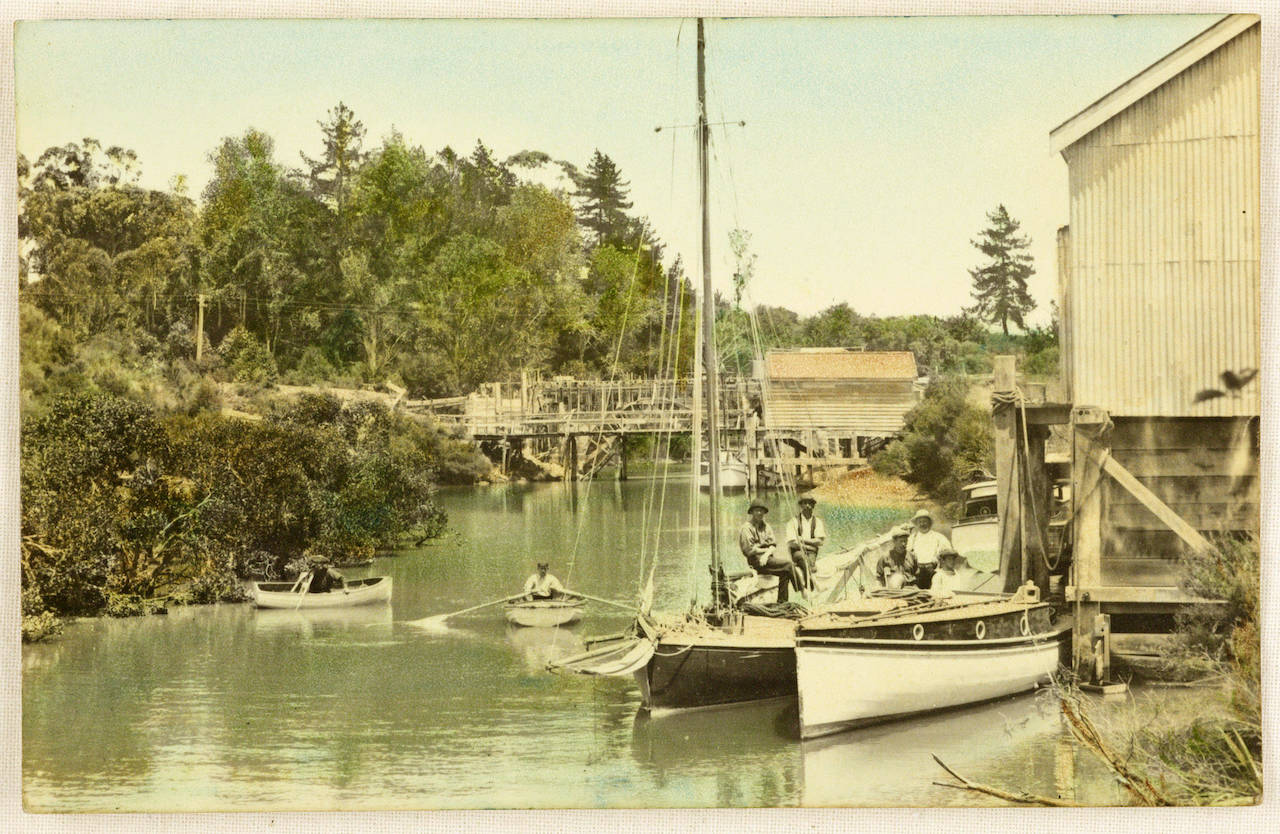 From the Wade river to gridlock. Photo: Auckland Council Libraries
Coast Chronicles is our regular deep dive into the stories and decisions that shaped the Hibiscus Coast you live in today.
Christmas, 1926. More than 100 cars sit nose to tail on the East Coast Road near Silverdale, wheels spinning in thick clay, drivers beaten by the “winterless north”.
It was not a one-off bad patch.
It was a public failure, right in the middle of the holiday rush, on the route people relied on to reach the Hibiscus Coast.
To see why it got that bad, go back before cars.
The Weiti River was the real highway, used by Te Kawerau ā Maki and Ngāti Kahu, with portages that connected people to Whangaparāoa and its shark fisheries.
Early European life clung to the riverbank for the same reason.
The clay roads were often impossible in winter, so the settlement grew where the water still moved.
The place was first known as “The Wade”, a twist on the Māori name Weiti.
In 1911 it was renamed Silverdale, partly to escape the jab of “Muddydale”.
But a nicer name did not change the ground.
By the 1920s, motor transport was overtaking river steamers, and the road network was lagging badly.
The East Coast Road mattered because it linked Devonport to Silverdale, yet it was described as being in a “very bad state” and a serious block to trade.
Local politics did not help.
Silverdale sat in the Pukeatua Riding of the Waitemata County Council, where Albany members were said to refuse funds for the northern road.
The Christmas jam was the breaking point.
Locals stopped waiting for a vote that never came and went straight to the Minister of Works.
Their offer was blunt and practical.
If the government paid for the metal, Silverdale residents would supply the labour and spread it themselves.
That “Battle for Metal” changed the trajectory.
In the late 1920s and early 1930s, road works followed, including the Birkenhead to Silverdale road being metalled for £6,800.
The old river economy felt it quickly.
By 1930, the Northern Steamship Company’s Omana stopped servicing the river route, and the steamer era was effectively over.
Silverdale began to turn away from the river that had shaped it and toward the roads that could carry it into Auckland year-round.
In the 2025, that clay-road isolation is hard to picture.
Silverdale is now a commercial gateway for a Hibiscus Coast population said to have grown past 69,000, and the Silverdale statistical area rose to 2,043 residents, up nearly 50 per cent from 2018 to 2023.
The argument today sounds different, but it rhymes.
People still talk about holiday choke points, only now the hope is pinned to projects like Penlink, rather than a fresh layer of metal over clay.
The point is not nostalgia.
It is a reminder that this connection has always been hard-won, and that Silverdale’s growth was never inevitable, it was built the moment locals refused to stay stuck.
Coast Chronicles is written by the Hibiscus Coast App editorial team, under the shared byline “the Coast Chronicler.”
Got a local memory or a news tip?
We’d love to hear it. Send it to [email protected]
FOOD & SHOPS

HEALTH & WELLNESS

AUTOMOTIVE & TRANSPORT SERVICES