Hibiscus Coast App

News


Army Bay Rockpools Under Scrutiny

20 January 2026, 12:07 AM

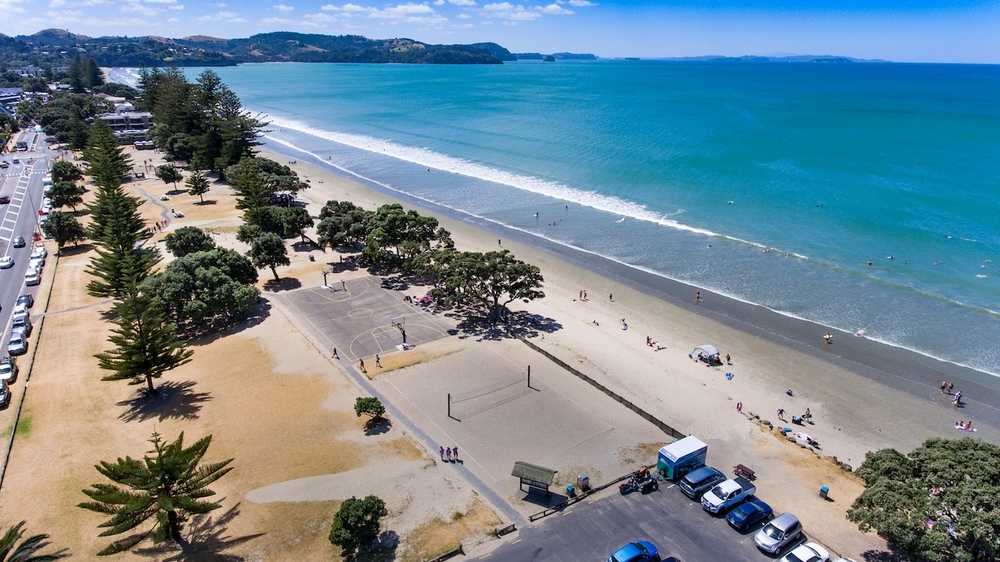
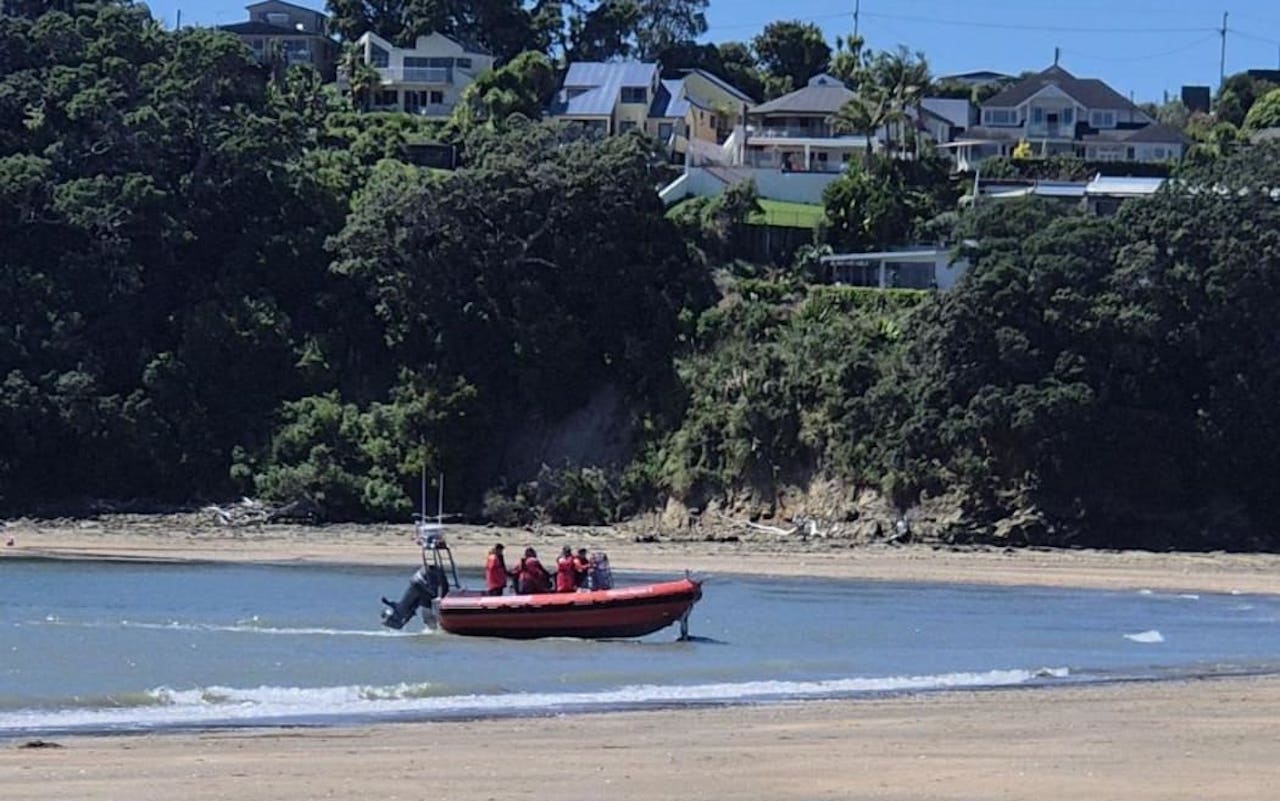
If you have seen bare rockpools lately, you are not alone. The Government is seeking urgent advice on how to respond to reports of rockpools on Whangaparāoa Peninsula and other areas being stripped of marine life, including at Army Bay on the Hibiscus Coast. Oceans and Fisheries Minister Shane Jones has asked Fisheries New Zealand officials to provide the advice “with urgency given the situation at Army Bay and elsewhere”. In October 2025, the Ngāti Manuhiri Settlement Trust requested a two-year temporary fisheries closure over the Rodney, Hibiscus Coast, and East Coast Bays coastline and some Hauraki Gulf islands.Fisheries New Zealand has collated submissions from public consultation and received feedback from the trust. “I acknowledge people are concerned at what they say is the indiscriminate collection of marine life at intertidal rockpools. These shellfish and other marine creatures reportedly being collected in large numbers by often big groups of people are crucial for the health of these ecosystems,” Mr Jones says. He says, alongside any potential fisheries closures, he is considering other steps to dissuade people from collecting marine life that is not traditionally eaten and is at risk of disappearing from some areas completely, including prohibitions on collecting certain species and social media campaigns “at educating collectors from all cultures about the risks of taking large amounts of sea creatures from tiny ecosystems”. In the past week, Parliamentary Under-Secretary Jenny Marcroft travelled to Whangaparāoa with Fisheries staff and met concerned residents and Ngāti Manuhiri Settlement Trust representatives. “We’re working with all parties to find a solution to the issue that is satisfactory to all, but we need to make sure there are no unintended consequences, such as for oyster farmers who legitimately collect spat from beaches,” Ms Marcroft says. She adds: “It is important to acknowledge that no one in this situation is breaking the law but it is clear that this level of collection of marine life from these intertidal pools is not sustainable.” “Minister Jones and I are determined to ensure these areas recover and thrive so that all Kiwis can enjoy them.”Know something local worth sharing?Send it to [email protected]

Dragon Boats Grow Regatta

19 January 2026, 10:40 PM

Dragon boat racing at the Auckland Anniversary Day Regatta on Monday, January 26 is set to be the biggest yet, with well over 500 paddlers lining up at Viaduct Harbour.More than 40 local teams will race, joined by four visiting crews from China. Recent years have typically drawn around 360 paddlers, making this year’s turnout a clear lift in scale and energy.Organisers expect the bigger field to deepen the competition and create a stronger spectacle for spectators along the Viaduct waterfront.The visiting crews from the Guangzhou Liede Dragon Boat Team will be the first China-based dragon boat team to take part in the regatta. Around 50 paddlers and supporters are travelling from Guangzhou, Auckland’s sister city, with the Auckland Dragon Boat Association and Auckland entrepreneur Wayne Huang helping bring the team to Auckland.Regatta Chair Bill Lomas says dragon boat racing has become one of the most exciting and accessible parts of the day, for both participants and spectators.“Seeing the number of teams and paddlers grow, and welcoming international crews for the first time, shows how the regatta is continuing to evolve,” he says.Dragon boat racing runs from 8.30am to 5.00pm at Viaduct Harbour. It sits alongside the regatta’s wider programme of on-water events, including classic yachts, sailing dinghies, keelboats, launches, tugboats and radio controlled yachts.For Coasties heading into the city for the long weekend, it’s a full day of fast-paced racing and a lively waterfront atmosphere.Seen something local we should cover?Let us know at [email protected]

ANZ's new floating interest rate means an extra $12m in profit

19 January 2026, 7:34 PM

The head of one of New Zealand's biggest mortgage broking firms has taken aim at the country's biggest bank for its latest interest rate increase.ANZ last week lifted its floating home loan rate by 0.1 percent.That takes it to 5.79 percent.Squirrel chief executive David Cunningham said the lift would mean an extra $12 million in profit for the bank each year.He said the rate had previously been in a "no man's land" between Kiwibank and the other major lenders - not the cheapest on offer, but not the most expensive either."Why have your floating rate lower than the bulk of your competitors? Just quietly put it up and go 'we may as well just take a bit more profit'. It's as simple as that."Cunningham said all other major influences on home loan rates had remained the same since ANZ last changed its floating home loan rate on 26 November, so it seemed that market conditions were the sole driver of the move.He said it would also help to fund the bank's 1.5 percent cashback offer for new home loan customers, which had been extremely popular. One Squirrel customer had received more than $30,000."For mortgage brokers it was sort of a gold rush, almost everyone that had the opportunity took it ... even as mortgage advisers, where we see a lot happening, we were pretty gobsmacked when we saw ANZ come out with that."He said banks were now competing with cash back rather than better interest rates, which meant those who did not move missed out.Customers should "play the game" when they could and move banks to earn cash back when it was available, he said.A spokesperson for ANZ said it was committed to offering competitive home loan rates."Since the OCR began to fall in August 2024, we've lowered our floating rate by 2.95 percent, more than any of the other main banks."On Tuesday we announced a small change to our floating and flexi rates to align with market conditions."Ahead of the November OCR cut, our floating rate was already below most of the main banks, our new rate remains competitively positioned among the main banks in the market today."We'll continue to review rates as global and local conditions evolve."Cunningham said the New Zealand banking system was hard to break into because the existing banks could adjust prices across their range to alter what profit they made."You've always got a bunch of products you can compete to protect your margin."Whereas if you're a mono-line provider and the competition turns to fixed rate loans and you haven't got a floating rate loan to subsidise it or a credit card or a personal loan at a high margin or cheap deposits to subsidise it... that's why the system is so resilient against attackers."Know something local worth sharing?Send it to [email protected]

Summer Produce Delivers Value

19 January 2026, 3:27 AM

Hibiscus Coast shoppers should see sharper fruit and vege value this summer as seasonal supply builds.Foodstuffs says summer supply is pushing produce prices down across New Zealand.Stats NZ reported annual food price inflation of 4.0% for December. Foodstuffs says its comparable basket rose 3.5% year on year.Some of the biggest December price drops were cucumbers (down 37.0%), lettuce (-19.4%), cauliflower (-19.3%), courgettes (-18.7%), broccoli (-17.5%) and kumara (-14.9%).Foodstuffs Managing Director Chris Quin says, “The summer months are prime time for salads, and in December lettuce and cucumbers were in strong supply.” He also points to stone fruit coming through well and Central Otago cherries in a short six-week season.Not everything is cheaper. Kiwifruit rose 66.8% year on year, with the local season finishing early and a switch to imported supply. Tomatoes were up 33.2%, with lower planting and strong export demand.Foodstuffs says supplier costs rose 4.7% year on year for products in its basket. The Infometrics Grocery Supplier Cost Index was up 2.4% a year.Red meat supply is steady, but global demand is keeping prices elevated, including beef steak (up 25.4%) and lamb chops (+18.3%). Quin says promoted cuts can offer value, while chicken and pork remain more affordable.Looking ahead, Foodstuffs says summer harvest will keep building into February, with sweetcorn, watermelon and new-season apples coming through.Know something local worth sharing?Send it to [email protected]

AT Lifts Fares, Parking Prices

18 January 2026, 10:38 PM

Hibiscus Coast commuters will pay a little more for buses, trains, ferries, and paid parking from Sunday, February 1.Auckland Transport’s annual price review means public transport fares and the price for on-street parking and Auckland Transport-managed carparks will rise on the same day.Public transport fares will increase by a weighted average of 5.1 percent.That works out to an extra 10 to 25 cents per trip for adult bus and train fares.Adult ferry trips will rise by 40 to 60 cents.On-street parking and Auckland Transport-managed carparks will also increase from February 1.Prices rise by 50 cents an hour across the region, excluding areas that have already had a price change over the past year.Auckland Transport says it has kept both changes as low as possible.It says they are below the rate of cost increases it has faced over the past year, which it puts between 10 and 16 percent for running the public transport network and parking services.AT Director of Public Transport and Active Modes Stacey van der Putten says: “We would love to keep our fares where they are, but annual increases are necessary to keep pace with rising costs and ensure we can continue delivering reliable and frequent public transport services.”The $50 weekly fare cap introduced last year remains unchanged.Auckland Transport says the cap delivered 886,000 free trips and saved customers more than $2 million in its first year.Auckland Transport also notes the tertiary concession increased from 20 percent to 40 percent in December, and the Community Connect concession continues to offer half-price fares for Community Services Card holders.For locals driving into Silverdale, Orewa, or the city for work, the parking change means higher hourly rates from February 1.Seen something local we should cover?Let us know at [email protected]

Government Seeks Rockpool Advice

18 January 2026, 1:33 AM

The Government has asked for urgent advice after reports of rockpools at Army Bay being stripped of marine life.Oceans and Fisheries Minister Shane Jones and Parliamentary Under-Secretary Jenny Marcroft say officials have been asked to respond quickly, given what’s being reported at Army Bay and other spots.In October 2025, a settlement trust asked for a two-year temporary fisheries closure covering the Rodney, Hibiscus Coast and East Coast Bays coastline, plus some Gulf islands.Mr Jones says officials have collated submissions from public consultation and also received feedback from the trust.“I acknowledge people are concerned at what they say is the indiscriminate collection of marine life at intertidal rockpools,” Mr Jones says. He says the shellfish and other marine creatures reportedly being taken in large numbers are crucial for the health of these ecosystems.Mr Jones says he is also considering steps to dissuade people from collecting marine life that is not traditionally eaten and is at risk of disappearing from some areas completely. He says options could include prohibitions on collecting certain species not usually taken for food, and social media campaigns to educate collectors from all cultures about the risks of taking large amounts of sea creatures from tiny ecosystems.Oceans and Fisheries - Parliamentary Under-Secretary, Jenny Marcroft.Ms Marcroft says she travelled to the peninsula in the past week with Fisheries staff, meeting concerned residents and representatives from the settlement trust.“It is important to acknowledge that no one in this situation is breaking the law but it is clear that this level of collection of marine life from these intertidal pools is not sustainable,” Ms Marcroft says.Know something local worth sharing?Send it to [email protected]

A Game Takes On Mould

17 January 2026, 7:22 PM

Mould feels like a winter problem, so it’s frustrating when it still shows up in a Hibiscus Coast home in summer. New Zealanders are often told preventing mould is simple: open the windows, turn on the fan and heat the house. Yet mould continues to plague homes across the country, raising a bigger question about whether advice alone is enough. Researchers at Massey University’s School of Built Environment think the issue is not a lack of information, but how it’s delivered. Their response is Mold Quest, described as the world’s first digital game designed to let people test everyday housing decisions and see how those choices influence mould risk in real time. Players step into a typical New Zealand house and move through bedrooms, kitchens and bathrooms, making choices about ventilation, heating, moisture and even furniture placement, then seeing immediate feedback on mould risk. Lead researcher Abdollah Baghaei Daemei says: “People are often told what they should do but not shown how those recommendations play out in everyday life. Opening a window sounds simple, but when, for how long and in which room, makes a real difference.” Massey University Researcher, Abdollah Baghaei Daemei.The team says people can struggle to connect abstract advice with daily routines, especially in older or poorly performing homes. Mold Quest was built around clear learning goals and tested in controlled experiments with 120 participants, comparing the game with video-based learning. Both groups gained knowledge straight away, but Mold Quest users showed stronger long-term knowledge retention and higher intrinsic motivation after four weeks, and reported lower mental effort and higher system usability. Abdollah says it can help tenants with realistic, low-cost strategies and give landlords a preventive education tool, while still recognising mould is a shared issue involving both behaviour and building performance. He says the game complements Healthy Homes Standards rather than replacing them, and the prototype is now being explored for future field trials and partnerships.Seen something local we should cover?Let us know at [email protected]

New Zealand passport drops down global power rankings

16 January 2026, 8:50 PM

Global rankings show New Zealand's passport is less powerful than last year.The Henley Passport Index for 2026 ranks New Zealand 24th-equal in the world in terms of destinations passport holders can travel to without a prior visa.People with New Zealand passports have easy access to 183 countries and territories, compared to 190 last year. Places in which travellers can get a visa on arrival are included in the calculation.The ranking puts New Zealand in the sixth tier, on par with nations such as Croatia, Estonia and Poland and in front of the United Kingdom, Australia and Canada.Last year New Zealand was in 17th-equal place, in the fifth tier with easy access to 190 countries.Singapore remains the most powerful passport in the world, with access to 192 countries without a prior visa, followed in second-equal place by Japan and South Korea.Henley said its rankings were based on "exclusive data from the International Air Transport Association (IATA) - the largest, most accurate travel information database" and enhanced by its own research team.The top passports were:192 countries - Singapore188 - Japan, South Korea186 - Denmark, Luxembourg, Spain, Sweden, Switzerland185 - Austria, Belgium, Finland, France, Germany, Greece, Ireland, Italy ,Netherlands, Norway184 - Hungary, Portugal, Slovakia, Slovenia, United Arab Emirates183 - Croatia, Czechia, Estonia, Malta, New Zealand, Poland182 - Australia, Latvia, Liechtenstein, United Kingdom181 - Canada, Iceland, Lithuania180 - Malaysia179 - United StatesThe weakest passports belonged to Pakistan, Yemen, Iraq, Syria and Afghanistan. Holders of an Afghan passport only have easy access to 24 countries.Seen something local we should cover?Let us know at [email protected]

Whangaparāoa rock pools stripped bare

16 January 2026, 2:49 AM

Mark Lenton, who grew up in the Auckland coastal community of Whangaparāoa, fondly remembers spending hours looking at the species in rock pools as a child.But he said the number of sea life gatherers had increased in recent years, and beaches along the Whangaparāoa Peninsula were being stripped bare."We have now got a surge in demand for our sea life. We not only see mum and dads, we also see busloads arriving at the beach, with buckets and tools, not only to take the more commonly consumed shellfish like oysters and mussels, but any marine plant or animal life that lives in the pools, hermit crabs, limpets, chiton, sea anemone, sea cucumber, anything that lives, no matter the size, goes in the bucket."He said this summer, he had seen several hundred people beach-combing at Army Bay, and that there were groups there almost every day."If you have a group of ten, for example, which is what we often see, between them, they can take 500 starfish off one beach in a day. On a busy day at Army Bay, we may get anything between 100 and 200 gatherers. That's 5000 starfish in one day. That's happening at Army Bay, all along the Whangaparāoa Peninsula, all down the eastern and western coastlines of Auckland, and it's happening all over New Zealand."Omaha local Mary Coupe said they were seeing fewer people beach-combing there, but that was because there was nothing left to take.''It's all gone. All our rock pools are already stripped out. They used to be full of shrimp, starfish, even anemones were scooped out with a screwdriver out of the little rock pools where they were hiding. We don't have the same traffic down here that we used to."University of Auckland marine biologist, Andrew Jeffs, said this is an issue he had witnessed first-hand."I've been at the beach and observed groups harvesting the organisms out of rock pools and taking them away by the bucket load."I've had conversations with people where I've questioned what they are doing on the beach, and they said, well, they're only little animals, and it doesn't matter. But it does matter because those animals often only live in a few small places in relatively small areas. Once you remove them, it's very difficult for them to actually come back and re-establish."He said that as the country had become more ethnically diverse, it had put pressure on species that were not always harvested here."People have different tastes in what they like to eat and enjoy, and harvesting from the shore of fresh seafood material is something that they enjoy."It's about managing that activity so it doesn't damage the environment, and whoever, whether it's the community or government, needs to work with those people to make it possible for them to have some of that enjoyment, but without damaging the environment."Even the traditional species, things like cockles and pipis that are in intertidal areas, they're being harvested harder than ever in a number of areas. And also climate change, some of those populations are getting increasingly stressed by hot summer weather, for example."He said there needed to be increased education and enforcement, better rules, and more support for communities that were taking action to try to stop the overharvesting of shore life.Last year, local iwi, the Ngāti Manuhiri Settlement Trust, applied for a two-year legal ban on harvesting all shellfish and seaweed from rock pools along Auckland's eastern coastline, from the Rodney local board area through to the Hibiscus and Bays local board area, under section 186A of the Fisheries Act.The iwi's chief executive, Nicola MacDonald, said that while harvesting shellfish had long been a common practice, as the area's population had grown, the amount of harvesting being done had become unsustainable."There are incidents not only isolated to Whangaparāoa, but dotted right across that coastline. It's important to make use of the laws we have and to seek Fisheries' relief. We're concerned, and I'm pretty sure that once people realise we're at the state of deprivation, they'll understand that New Zealand beaches and sealife cannot take this level of take."We need to give the coastlines a break from harvesting, and for people know about it, so we can work towards restoration."I've seen 186As work successfully when iwi and community are working together, supporting one another to educate all people. I've seen it with Waiheke Island and Ngāti Pāoa and the communities there when they put an application in around their scallops and crayfish. Not that long ago, there was only one living crayfish on Waiheke. Now they can see many more. That's fantastic, that's what we want to see for our coastline."She said there needed to be more education about the harm that harvesting species to depletion was having on the ecosystem."Those species are the engineers of the marine environment. We need them to build strong structures for other species. If there's nothing left, all of that marine environment collapses."Oceans and Fisheries Minister Shane Jones said he was aware of issues with rock pool harvesting, specifically on Auckland's east coast.He confirmed he would make a decision about the Ngāti Manuhiri Settlement Trust's request next month."I appreciate there's a sense of urgency around the Hibiscus Coast. But we need to ensure every time we bring a new regulation in, that preferably we take a regulation away, but bringing in a regulation to impose a rahui around that part of Auckland needs to be embraced and understood by the broader community that this is a necessary step to secure better outcomes for the rock pools' sea life."Fisheries North Regional Compliance Manager, Andre Espinoza, said the agency was aware of people gathering seafood in the Whangaparāoa area, but that most were harvesting legally within the current recreational daily limits.He said Fishery officers had observed private tour groups visiting Whangaparāoa beaches and that people often used public buses to visit beaches."It's important to note that it's not illegal for large groups to collect seafood in any area that is open, but they must follow the rules, and only people actively gathering seafood can take their applicable daily bag limit."Mark Lenton said that his group, Protect Whangaparāoa Rockpools, would be protesting peacefully at Army Bay on Saturday.The group is calling for better protection of rock pools and intertidal zones, and more education around marine conservation.Fisheries said suspected illegal activity could be reported through the 0800 4 POACHER number (0800 476 224).Seen something local we should cover?Let us know at [email protected]

Cost of building a new house set to rise

15 January 2026, 7:41 PM

It could become more expensive to build a house this year.Cotality, formerly known as Corelogic, has released its latest Cordell Construction Cost Index, which shows residential building costs increased by 0.9 percent in the three months to December.The index is made up of 50 percent materials, 40 percent wage costs and 10 percent other expenses such as professional fees and consenting.The annual pace of increase rose to 2.3 percent, but is still below its long-term average of 4.1 percent since 2012.Cotality chief property economist Kelvin Davidson said the pace of growth was constrained."We are certainly not seeing the extreme inflation experienced in the post-Covid phase, when the [index] annual growth rate peaked at more than 10 percent in late 2022."During that period, there were supply chain issues for key materials such as plasterboard and rising wages also drove up costs significantly."However, although they're not rising to any huge degree at present, costs haven't seen significant falls either. Following the previous growth phase, the overall level of cost to build a new dwelling remains elevated even though the growth rate has cooled," he said.He said confidence was returning to the construction sector.The number of dwelling consents has started to rise again, and reached 35,500 on a 12-month basis in October.Davidson said that was a turnaround after a period of stagnation."After peaking at more than 51,000 in the 12 months to May 2022, the number of new dwellings consented dropped to a low point between 33,500 and 34,000. We are now seeing a recovery that aligns with anecdotal evidence that builders are becoming busier again."Activity would probably pick up with interest rates down, and rules such as loan-to-value ratios and debt-to-income rules making new builds more appealing."I don't think we'll necessarily see a big rise [in costs] because wages, the labour market is still relatively softer than it was a couple of years ago."You wouldn't think there'd be large wage increases for the builders, but there might be a wee bit more pressure coming through there. And then materials as well, a wee bit more pressure, but again, not that returning post-Covid."He said activity could generally trend higher this year and cost pressures could return to normal.Brighter outlook for construction firmsThings were looking up for construction firms, he said."There's always going to be individual experiences and distributional effects in here, but what I hear on the ground and from people I talk to in the construction industry, there is a bit more confidence coming through."It takes a while, and it's been a pretty big downturn for sure, and some developers have done it pretty tough, maybe buying land at the absolute peak value and then seeing interest rates go up and demand for that product come down, prices they could eventually sell it for come down… a big squeeze on margins when you've paid top dollar for land, the cost to build has gone up, the eventual selling price has come down. It's been pretty tricky."Some people have obviously done it pretty tough, but I guess the other thing I think you also have to acknowledge is that, yes, it's been a big downturn, but it was coming off an incredibly high base. So, actually, in the long run context, we're still building a decent number of properties compared to what we've done at the previous troughs."So, you know, it's not all doom and gloom, but at the same time acknowledging that it has been tricky for a lot of builders."A period of slower construction cost growth was good for homeowners potentially committing to a build, he said."If you sign up for something off the plans and it's not going to be ready for 12 or 18 months, at least you can kind of have a bit more confidence that it's not going to run away in the meantime. I think that a bit more stability is probably what people have been hoping for."And that is kind of what we've seen in the past sort of year or two… I think a lot of people would probably say it's still expensive to build a house. But the growth rate hasn't been as fast. So, you know, things have stabilised, have plateaued. And I guess, you know, with interest rates coming down, it just does get a bit more affordable."There was a premium for a new build compared to existing houses, he said, but that could reflect the fact that maintenance cost should be lower and the property could be built to higher specifications."It stands to reason that new builds will cost a little bit more than existing properties, but then there are those benefits too."Know something local worth sharing?Send it to [email protected]

1-20 of 1957